
Boxing vs Kickboxing for Fitness: Which Should You Actually Pick?
An honest comparison of boxing and kickboxing as fitness modalities. Differences in technique, intensity, injury risk, learning curve, and who each one actually suits.
April 22, 2026 · By BBBC Coaching Staff
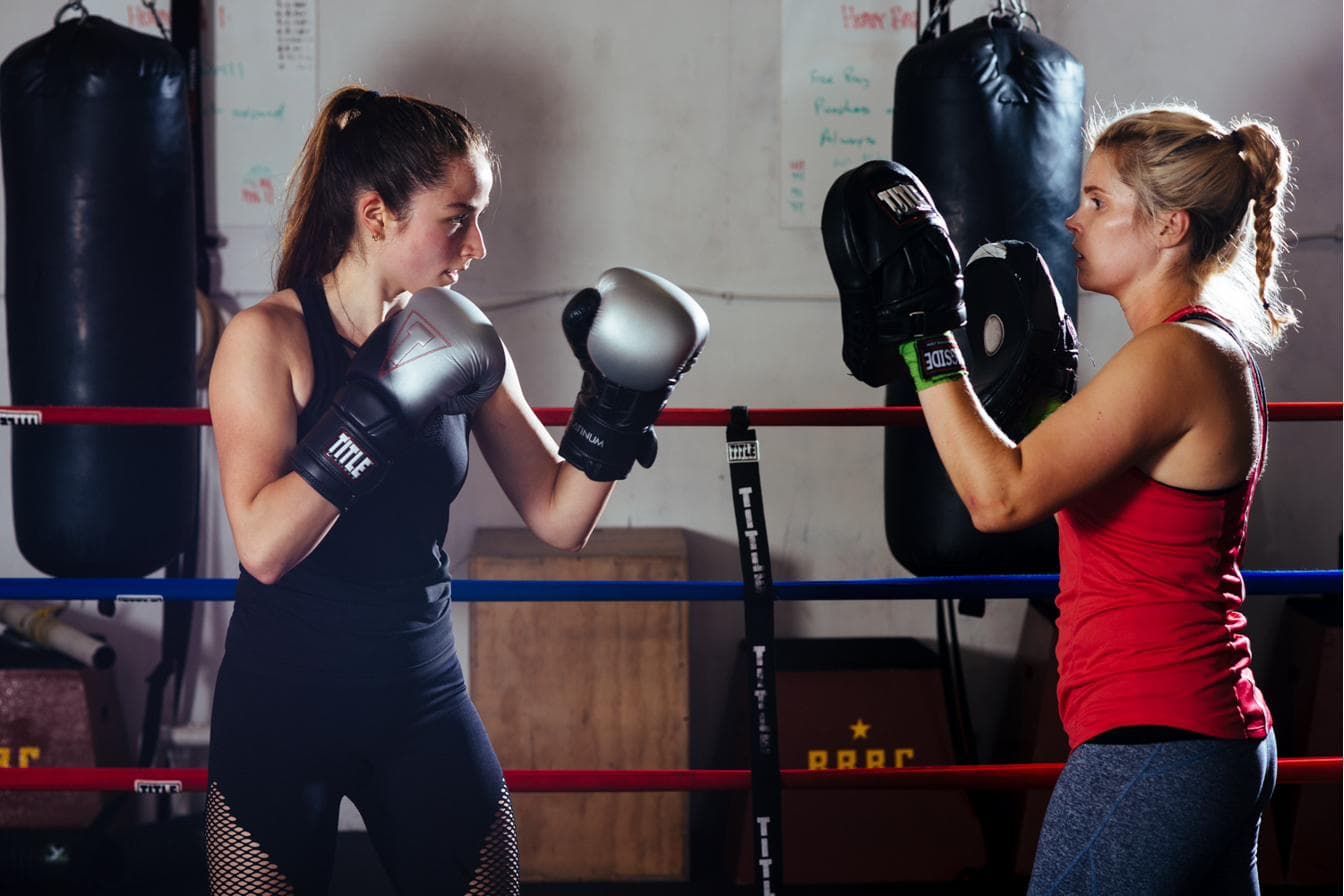
People considering combat sports for fitness usually narrow it down to two options: boxing or kickboxing. The choice matters less than committing to one and showing up regularly, but the choice isn't arbitrary. The two are different enough that one will probably suit you better than the other.
This post compares the two honestly. We coach boxing, so there's a natural bias, but we're going to try to be fair. Both are excellent fitness modalities. Both build real skill if you take them seriously. They just optimize for different things.
What each one actually trains
Boxing uses your hands only. Four punches, infinite combinations of them: jab, cross, hook, uppercut. The rest of your body exists to deliver those punches: feet for movement and angles, hips for rotation, core for transfer, shoulders for extension. The defensive game is rich: slips, rolls, blocks, parries, distance management. The complexity in boxing lives in the subtle layers: timing, range, rhythm, reading your opponent.
Kickboxing adds the legs as weapons. Roundhouse kicks, push kicks, knees, often elbows depending on the style (Muay Thai includes them, American kickboxing typically doesn't). The toolkit is bigger, but each tool is less refined than in boxing. You spend less time mastering any single technique because there are more techniques to learn.
The training methodologies follow from this. Boxing classes spend disproportionate time on footwork and hand technique. Kickboxing classes spread attention across a wider range of strikes.
Fitness profile
This is where most beginners want to start, and where the differences are smaller than people expect.
Cardiovascular load. Both are aerobic and anaerobic by turns. Both will get you out of breath. Kickboxing involves more total body movement per minute because kicks are larger movements than punches, so the heart rate ceiling usually runs a bit higher in a typical kickboxing class.
Strength. Boxing develops disproportionately strong shoulders, lats, and obliques. Kickboxing adds significant work for the hip flexors, glutes, and hamstrings via the kicking action. Both train the core hard, but in different ways.
Mobility. Kickboxing demands more hip mobility, particularly external rotation, to throw kicks safely. Boxing demands less mobility overall, which means it's easier to start with a stiff body. If you currently have limited hip mobility, kickboxing has a steeper on-ramp.
Calorie burn. Roughly equivalent over a 60-minute class. Both burn substantial calories. Neither is meaningfully better than the other for body composition; that depends on consistency, nutrition, and sleep, not on which striking art you chose.
Learning curve
Boxing has a deceptively steep learning curve. The toolkit is small (four punches) so people assume it's simple. It isn't. Boxing is a sport of inches and degrees. A good jab is wildly different from a mediocre jab in ways that take a year of practice to feel.
Kickboxing has a flatter early curve. There are more techniques to learn at the start, so you spend more time learning the catalog and less time refining any one piece. People often feel like they're progressing faster in kickboxing in their first three months because they're acquiring new techniques. Whether they're refining them is a different question.
For pure beginners who want to feel skill progress quickly, kickboxing can be more rewarding early. For people who want depth over breadth, boxing pays off more over time.
Injury risk
Honest answer: both have low injury risk when practiced with good coaching and proper progression. Both have higher injury risk than running on a treadmill.
Boxing-specific risks. Wrist and knuckle injuries if you punch with poor mechanics, especially on heavy bags. Shoulder strain from repetitive impact. Lower back from poor rotation mechanics. Most of these are coaching-driven, not inherent to the sport.
Kickboxing-specific risks. Shin and foot injuries from kicking, especially heavy bags, before your shins are conditioned. Knee issues from poor pivoting mechanics. Hip flexor strains from over-eager kicking. Lower back from poor balance during kick recovery.
Kickboxing has slightly higher injury risk for beginners because the kicking movements involve longer levers and more torque. This isn't a reason to avoid it, just a reason to pick a gym with experienced coaching and a sensible progression model.
Time commitment
Both reward consistency, but boxing rewards lower frequencies more. You can train boxing twice a week and make real progress for years. Kickboxing usually needs three or four sessions a week to feel like you're moving forward, because the techniques are spread thinner and each one needs maintenance.
If you have limited weekly time (two sessions max), boxing is probably the better fit.
Who each one suits
A rough guide.
Boxing suits people who:
- Want depth over breadth in their training.
- Have limited time and want progress from two to three sessions a week.
- Are stiff or have limited hip mobility (boxing is friendlier to start with).
- Enjoy chess-like aspects of training: range, timing, reading patterns.
- Want a refined skill they can keep developing for decades.
Kickboxing suits people who:
- Want maximum technique variety and a bigger toolkit.
- Have good hip mobility and want a workout that demands more of it.
- Enjoy bigger, more dramatic movements (kicks feel powerful).
- Want faster early skill acquisition.
- Are interested in Muay Thai, MMA, or related sports eventually.
These are tendencies, not rules. Plenty of people thrive in the form that doesn't match this profile. The best way to find out is to try both, one class each, and notice which one you want to come back to.
What we'd recommend if you're stuck
If you can't decide, do this:
- Try one boxing class somewhere. Most gyms with reputable coaching offer a free first class.
- Try one kickboxing class somewhere. Same deal.
- Wait three days.
- Ask yourself which one you'd be more disappointed to never do again.
The answer is usually clearer than you expect.
If the answer is boxing, your first class with us is free. Mondays through Fridays at 6 AM, 12 PM, 4:30, 5:30, and 6:30 PM, plus Saturday mornings at 9:30 and 10:30. Show up ten minutes early, bring water, and wear clothes you can sweat in. We'll handle the gloves.
If the answer is kickboxing, we don't offer it (we are specifically a boxing gym) but we can point you toward gyms in Seattle that do good work. Email us and we'll send recommendations. Pick the form you'll keep doing. That's the only choice that actually matters.
Your first class
is always free.
Show up, train, decide for yourself. No commitment, no follow-up sales pressure.
Reserve Your Free Class