
Boxing for Beginners Over 40: How to Start, What to Expect, What Actually Matters
A practical guide to starting boxing in your 40s, 50s, and beyond. What's different, what's not, and why so many beginners over 40 find it the most engaging fitness they've ever tried.
May 8, 2026 · By BBBC Coaching Staff
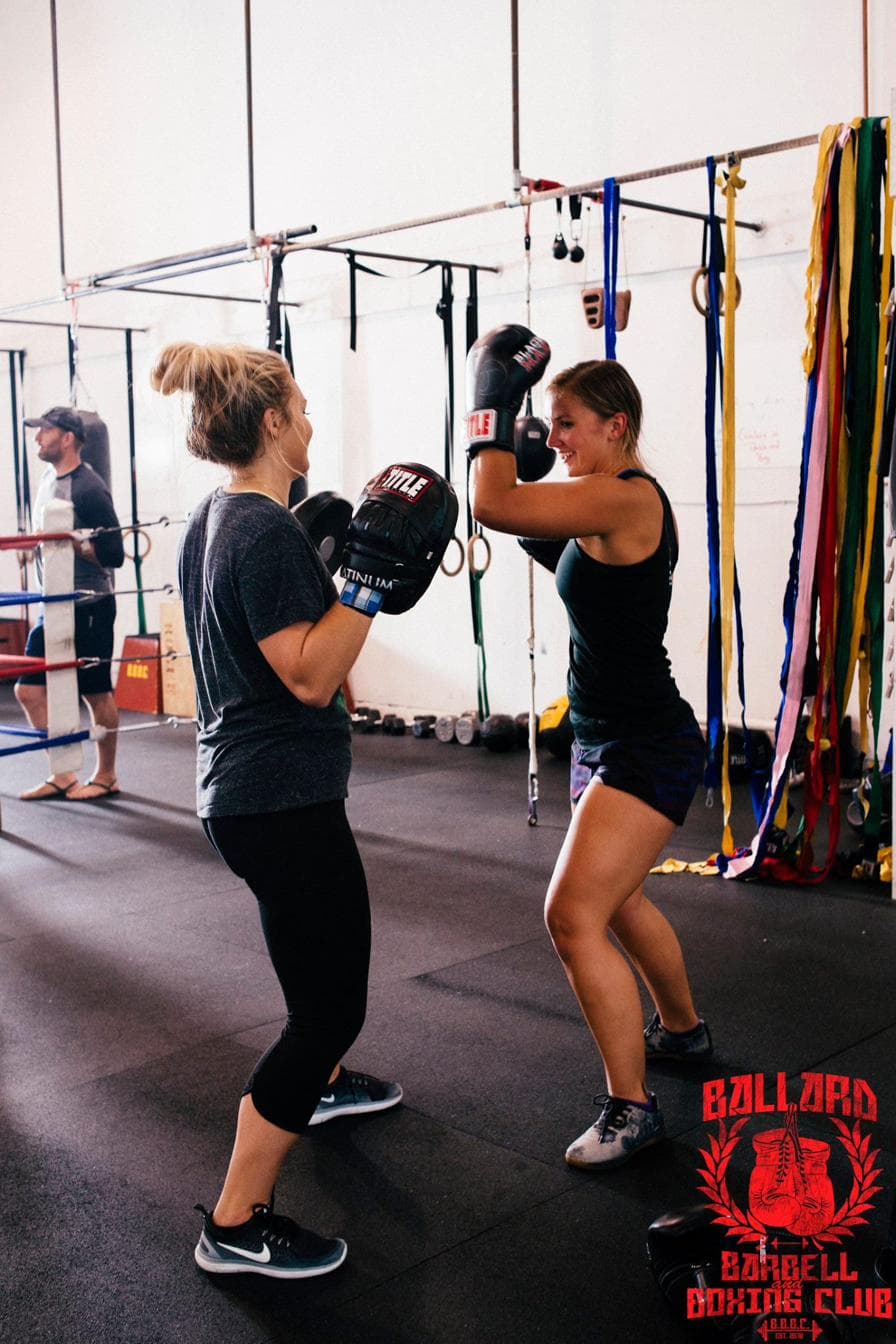
The fastest-growing demographic at our gym is people who hadn't worked out seriously in fifteen years and decided, sometime around their forty-fourth birthday, that they wanted to try boxing.
If that's you, this post is for you. Some of what follows applies to anyone starting boxing. The parts that are specifically about being over forty are honest, not condescending, and based on coaching a lot of people who started where you're starting now.
Why boxing actually works for people over 40
There's a reason boxing keeps winning over people in this age range when other workouts have lost them.
The first reason is cognitive engagement. By the time you're forty, you've been to enough gyms to know how mind-numbing most workouts are. Treadmills, ellipticals, the same five lifts forever. Boxing has a learning curve that takes years to climb, so every class has something to think about: the angle of your hook, the timing of your slip, the footwork on a step-pivot. You don't get bored because your brain is busy.
The second reason is full-body engagement. Most fitness programs target some part of the body in isolation. Boxing involves your feet, hips, core, shoulders, and brain on every punch. You finish a class having moved every joint and every major muscle group, often in coordinated combinations that nothing else trains.
The third reason, which most beginners don't anticipate, is the emotional component. There is something about hitting things that resolves a kind of accumulated stress that adult life builds up. Several long-term members have used phrases like "cheaper than therapy" to describe it. We are not therapists and would never make medical claims, but the experiential pattern is real.
What's actually different at this age
A few things are genuinely different about starting boxing later. None of them are obstacles. They just need to be respected.
Recovery takes longer. Your twenty-three-year-old body recovered overnight. Your forty-three-year-old body doesn't. Plan for one or two recovery days between training sessions when you start. Three classes a week is plenty. The mistake we see new members make is going five times their first week, then disappearing for two weeks because everything hurts.
Mobility matters more. Range of motion in your shoulders, hips, and thoracic spine usually decreases with age and desk work. This affects your boxing in obvious ways (you can't punch straight if your shoulder is locked up) and in less obvious ways (your hips not rotating means your power has to come from your arm, which is exhausting). Five minutes of dedicated mobility work three times a week, separate from training, makes a substantial difference.
Sleep and nutrition stop being negotiable. When you're twenty, you can train hard on five hours of sleep and a burrito. When you're forty-plus, that combination produces a person who feels terrible the next day and progresses slowly. Sleep seven to nine hours. Eat protein with most meals. Drink water. This is boring advice that is also the difference between progress and frustration.
Injuries get expensive. Not financially. Time-wise. A pulled muscle that would have laid up a twenty-year-old for two days might keep a forty-five-year-old out for two weeks. The way to avoid this is to warm up properly, progress slowly, and be honest with your coach about what's bothering you that day. We can modify almost anything. We cannot modify after you've already torn something.
What is not different
The encouraging part. Most of what makes boxing work for younger beginners works just as well for older beginners.
You can learn real boxing technique at any age. Footwork, defensive movement, combinations, range management. None of these have an age limit. Some of our most technically refined members started in their fifties.
You can get genuinely fit at any age. Cardiovascular capacity, strength, mobility, body composition. All of these respond to training regardless of age. The response is slower than it was at twenty-five, but it's still real and it adds up over months.
You will not be the slowest person in the room. We promise this and we mean it. The mix of members at any given class includes people who couldn't get through warm-up two months ago and people who've been training for years. The pace adjusts naturally.
You will not be hit. This is worth saying again because it comes up. The training is partnered, on focus mitts. Your partner holds the pads. You punch the pads. Sparring exists at BBBC, but it is a separate, opt-in part of training that happens only after months of skill-building and only under direct coach supervision. Many members never spar and have a great time anyway.
How to start, practically
A simple plan that works for most people in this age range.
Week 1: One class. Just one. Get the feel of the gym, the gear, the coach, the warm-up. See how you feel the next day.
Weeks 2-4: Two classes a week. Pick two days that work for your schedule. Try to keep them on roughly the same days each week. Show up. Don't think about it too hard.
Weeks 5-8: Two to three classes a week. Add a third class on a different day. Notice how your jab feels noticeably less awkward. Notice you're sweating less at the warm-up. Notice your recovery is improving.
Month 3+: Three to four classes a week. This is the sweet spot for sustainable training. You're seeing meaningful skill progress, fitness gains, body composition shifts. You're not breaking down. You're enjoying it.
Some people want to train more than this. That's fine, with caveats. More frequency only works if you're also sleeping well, eating enough, and managing soft-tissue care (foam rolling, light stretching, the occasional massage). If you start training five days a week and your sleep gets worse, drop back to four.
A note on injuries and conditions
If you have a pre-existing condition (back issues, shoulder issues, prior surgeries, a heart condition, anything chronic), talk to your doctor before starting boxing. Most doctors will be supportive because boxing is one of the better full-body workouts you can do at this age. They may have specific guidance for your situation.
Then tell your coach. Not in a long meeting, just a quick mention before your first class. "I've had two shoulder surgeries on the right side." "My low back gets cranky." "I had a knee replacement four years ago." We modify around all of this every day.
What to do this week
If you've been considering this for a while, the move is to stop reading articles about it and book a free first class. We have classes Monday through Friday at 6 AM, 12 PM, 4:30 PM, 5:30 PM, and 6:30 PM, plus Saturday mornings at 9:30 and 10:30. Show up ten minutes early. Bring water. Wear clothes you can sweat in. The first class is always free and there's no follow-up sales pressure if you decide it's not for you.
Most people who try boxing in their forties tell us the same thing in their third month: "I wish I'd done this ten years ago." You can't go back ten years. You can go this week.
Your first class
is always free.
Show up, train, decide for yourself. No commitment, no follow-up sales pressure.
Reserve Your Free Class